The differentiator
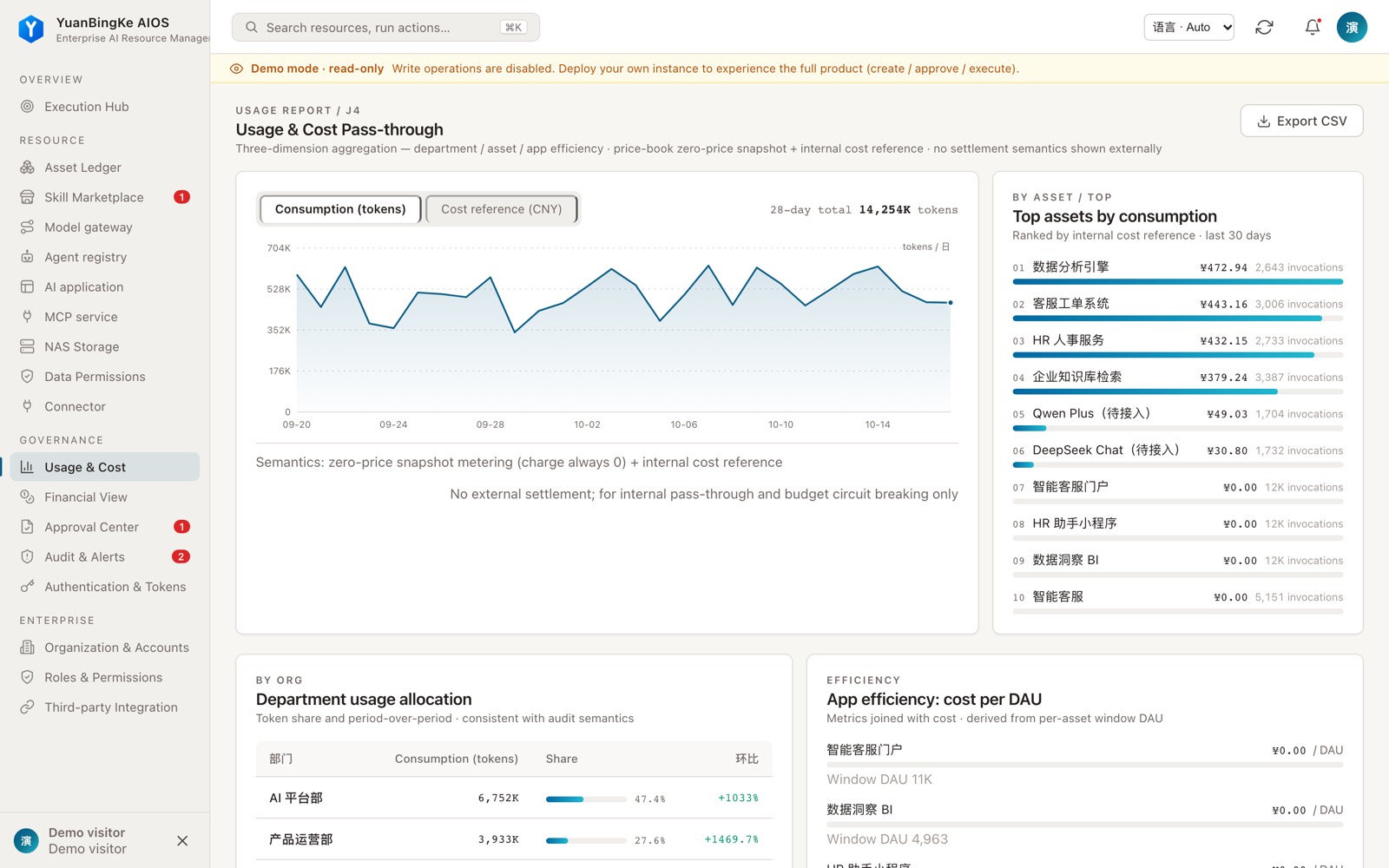
Cost attribution, not cost observation
Trace viewers tell you what happened. YBK tells you which department, which agent, and which skill is responsible — the three axes you need to actually cut a number.
七类 AI 资产统一台账 · 成本三维归因 · 生命周期状态机 · 94 个权限点 · 完整审计留痕
元冰可 · 企业 AI 资源管理平台 — 完全自托管,中文企业内网可直接私有化部署
The demo is a read-only snapshot with real seed data — no signup, nothing to install.
Most teams now have MCP servers, prompt skills, autonomous agents and internal AI apps running in production. Nobody has one place that answers: who owns this, what does it cost, who is allowed to call it, and what happened last Tuesday.
Observability tools watch traces. IAM tools issue credentials. Cost tools read invoices. None of them agree on what an "asset" is — so nothing can be retired.
"Spend is up 30%" is not an answer. You need to attribute it to department × agent × skill before you can act on it.
Source code, prompts, tool credentials and audit logs sit inside your firewall. Most AI tooling today assumes the opposite.
Trace viewers tell you what happened. YBK tells you which department, which agent, and which skill is responsible — the three axes you need to actually cut a number.
MCP services, Skills, Agents, AI apps and NAS hosts all live in the same inventory with the same lifecycle state machine — so retiring a stale agent is a state change, not a scavenger hunt.
Draft → registered → active → deprecated → retired, with dependency topology so you can see the blast radius before you change anything.
Fine-grained resource.action permissions enforced server-side on 499 REST routes and 98 MCP tools. Read and write are genuinely separated.
Every mutation records actor, target, before/after and approval chain. Exports as JSON for your SIEM.
Registering or promoting an asset routes through approvers. Demo data includes real approval chains.
These tools solve adjacent problems well. YBK's scope is the whole inventory — identity, cost, lifecycle and audit together.
| Capability | YBK | Trace / LLM observability | Agent identity (IGA) | Generic CMDB |
|---|---|---|---|---|
| Unified asset ledger (5 types) | Yes | No | Partial | Partial |
| Cost attribution (dept × agent × skill) | Yes | Spend totals only | No | No |
| Lifecycle state machine | Yes | No | No | Yes |
| Dependency blast-radius analysis | Yes | Call graph only | No | No |
| Fully self-hosted + MIT | Yes | SaaS / paid self-host | Self-host varies | Paid |
| Zero added dependencies | Yes | — | — | — |
| zh-CN / en-US / ja-JP | Yes | EN only | EN only | Varies |
Competitor capabilities change fast — this table reflects what was publicly documented when this page was built.
Captured from the public read-only demo instance with real seed data. No mockups, no design mock data.
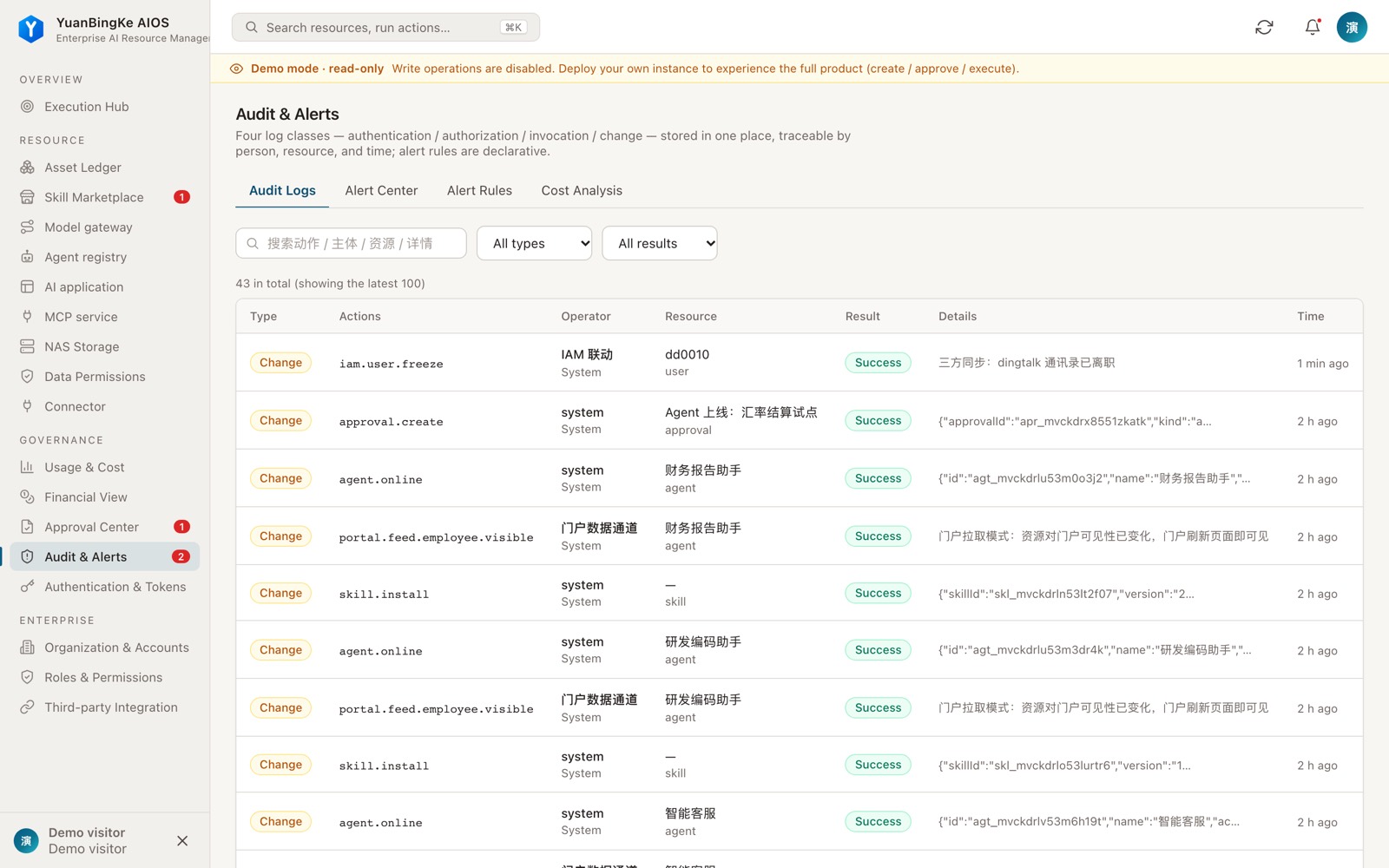
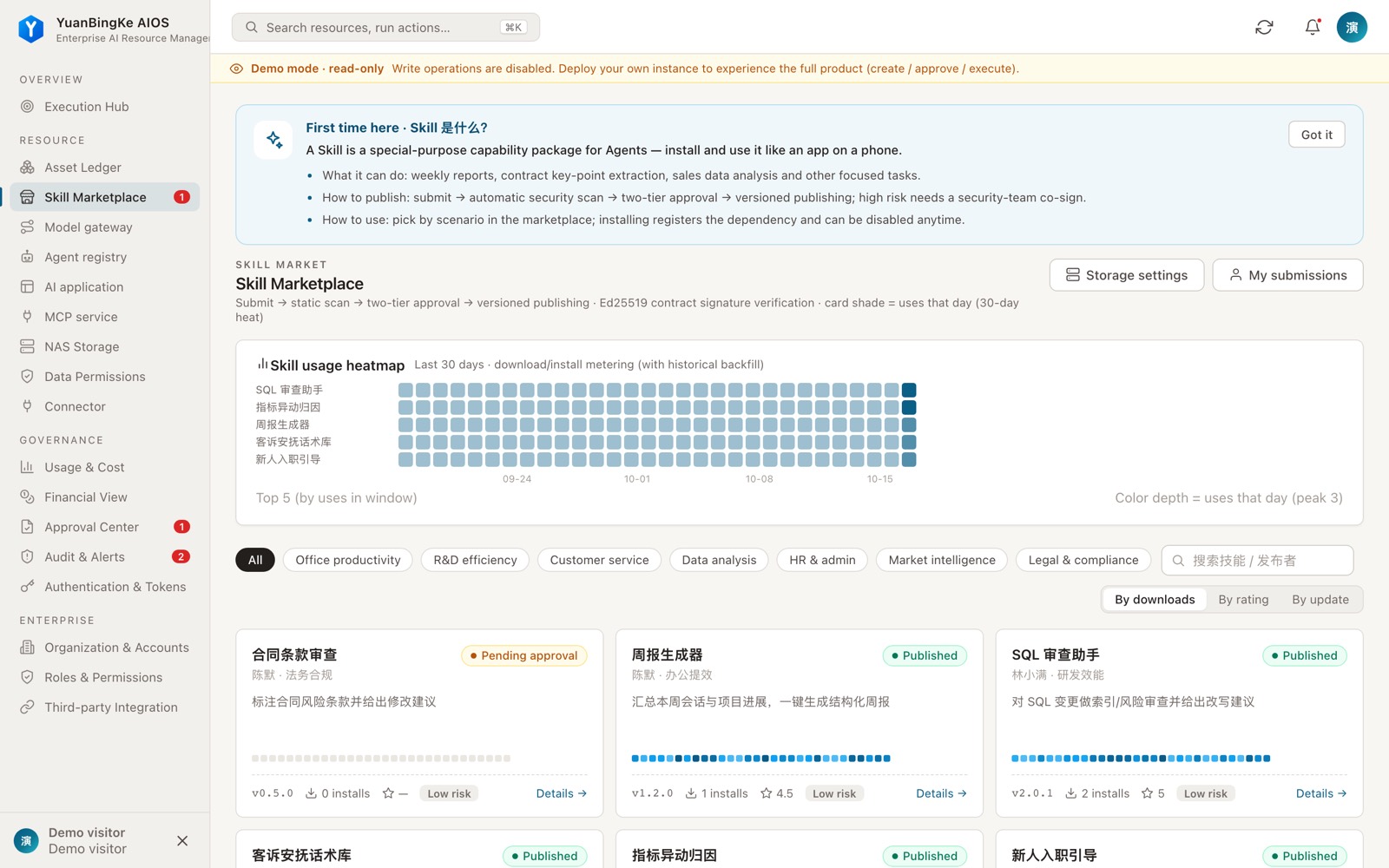
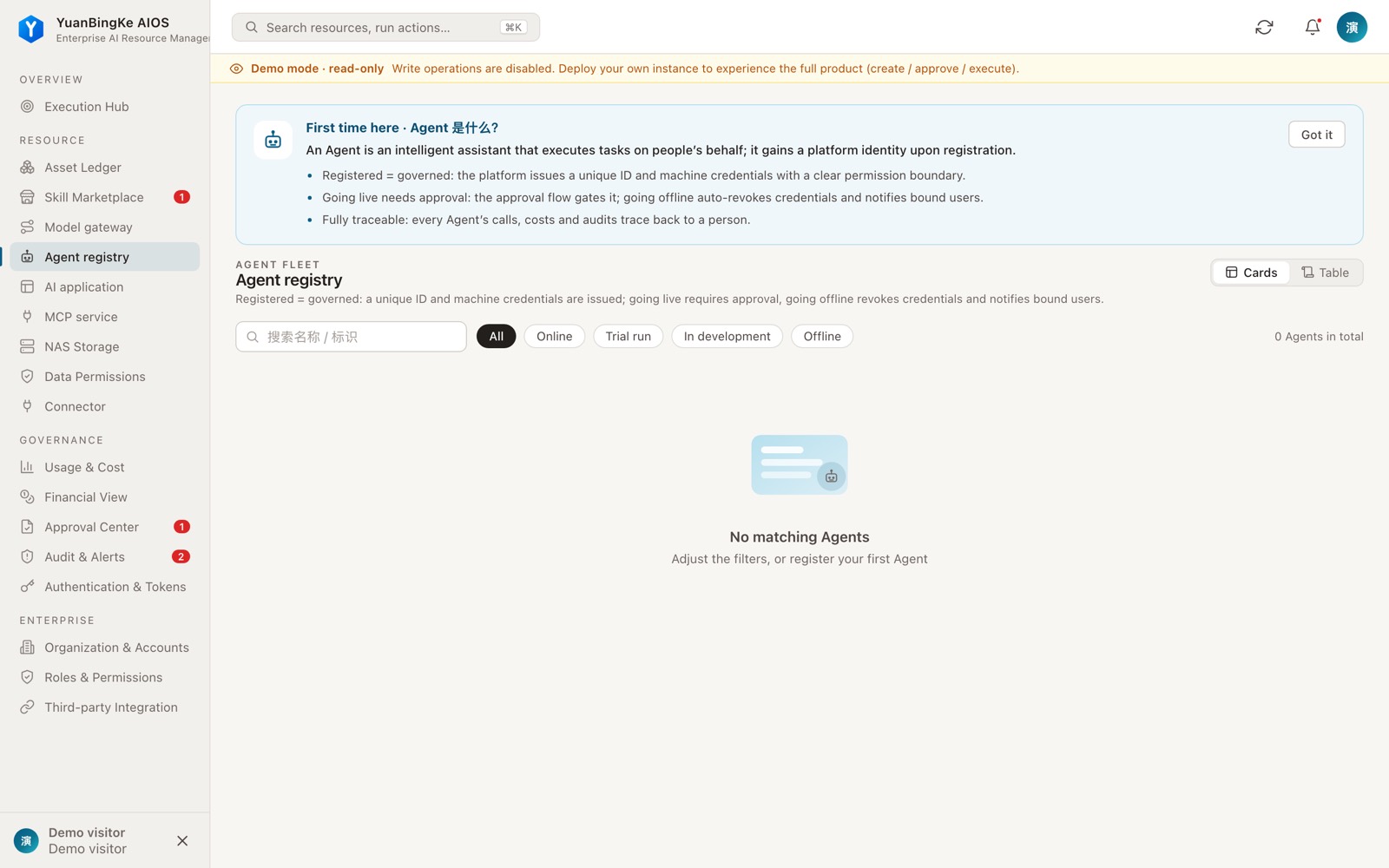
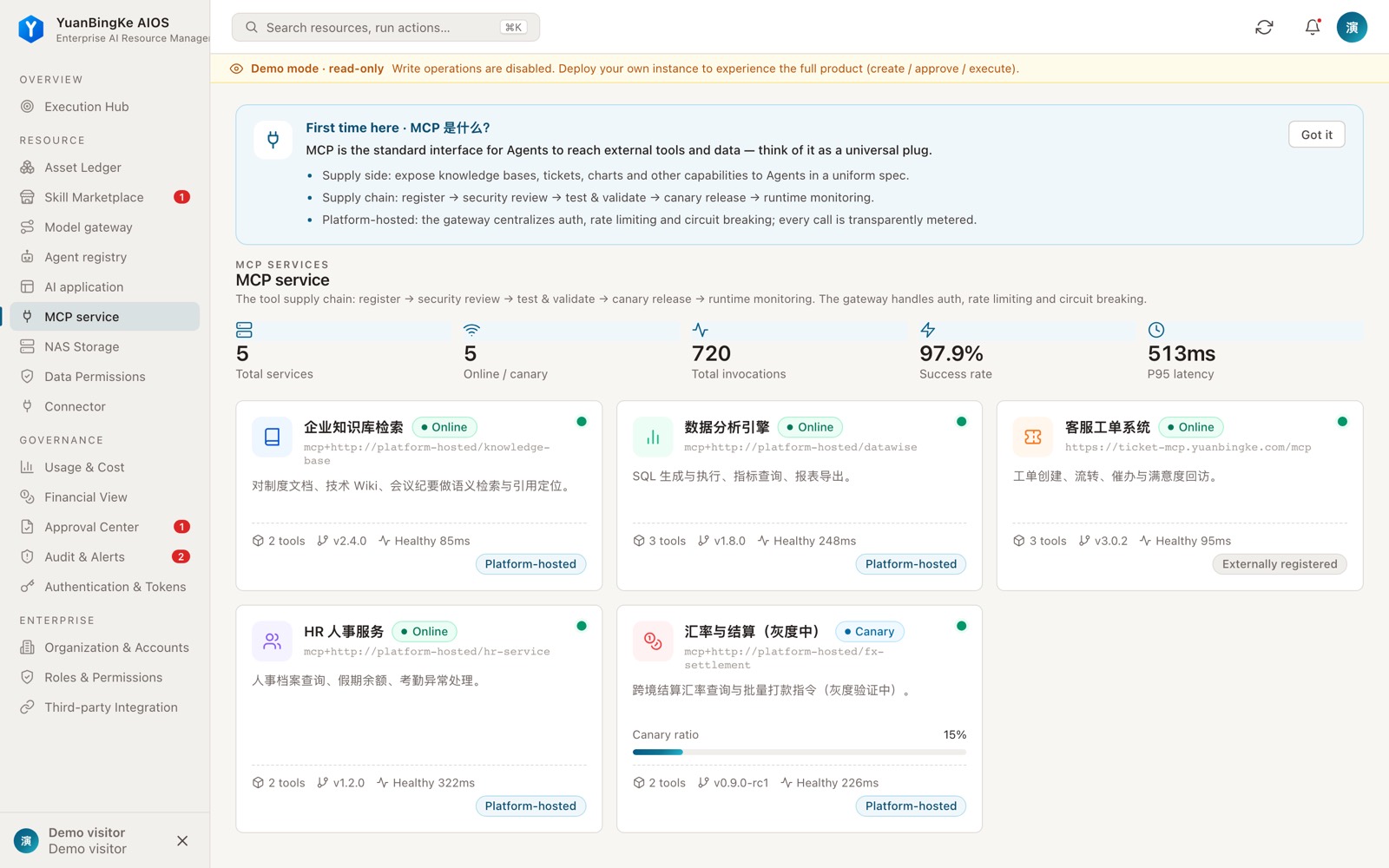
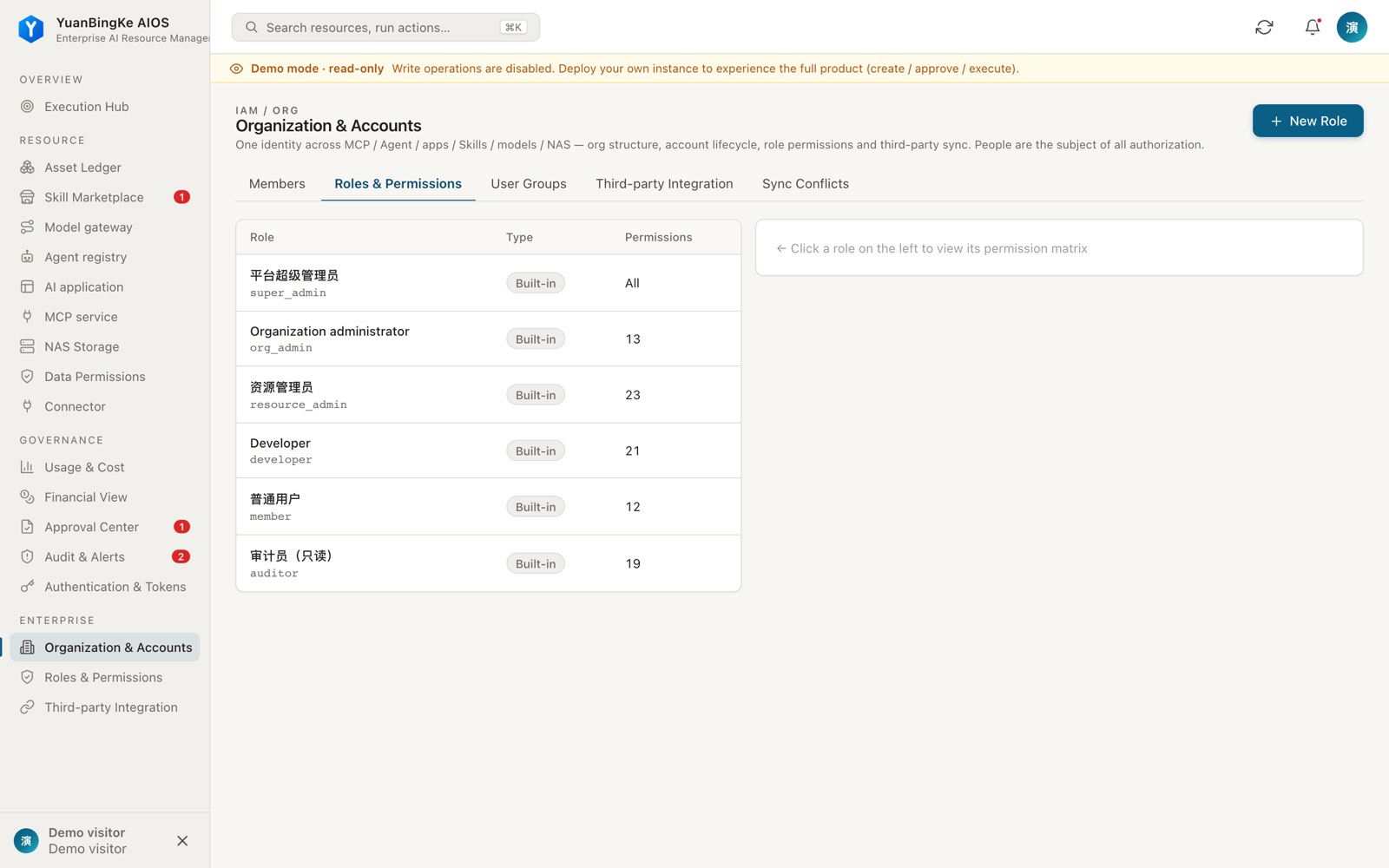
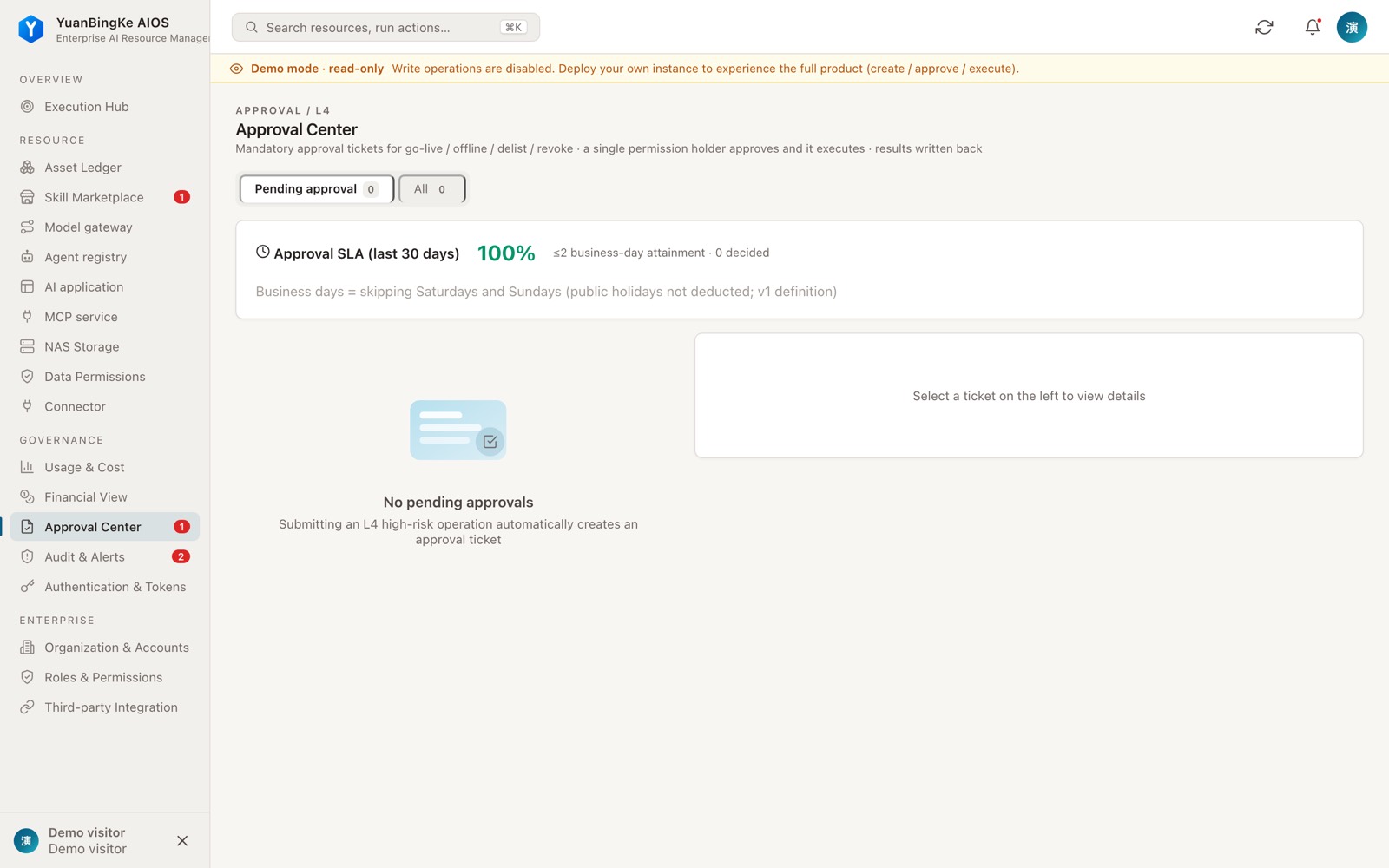
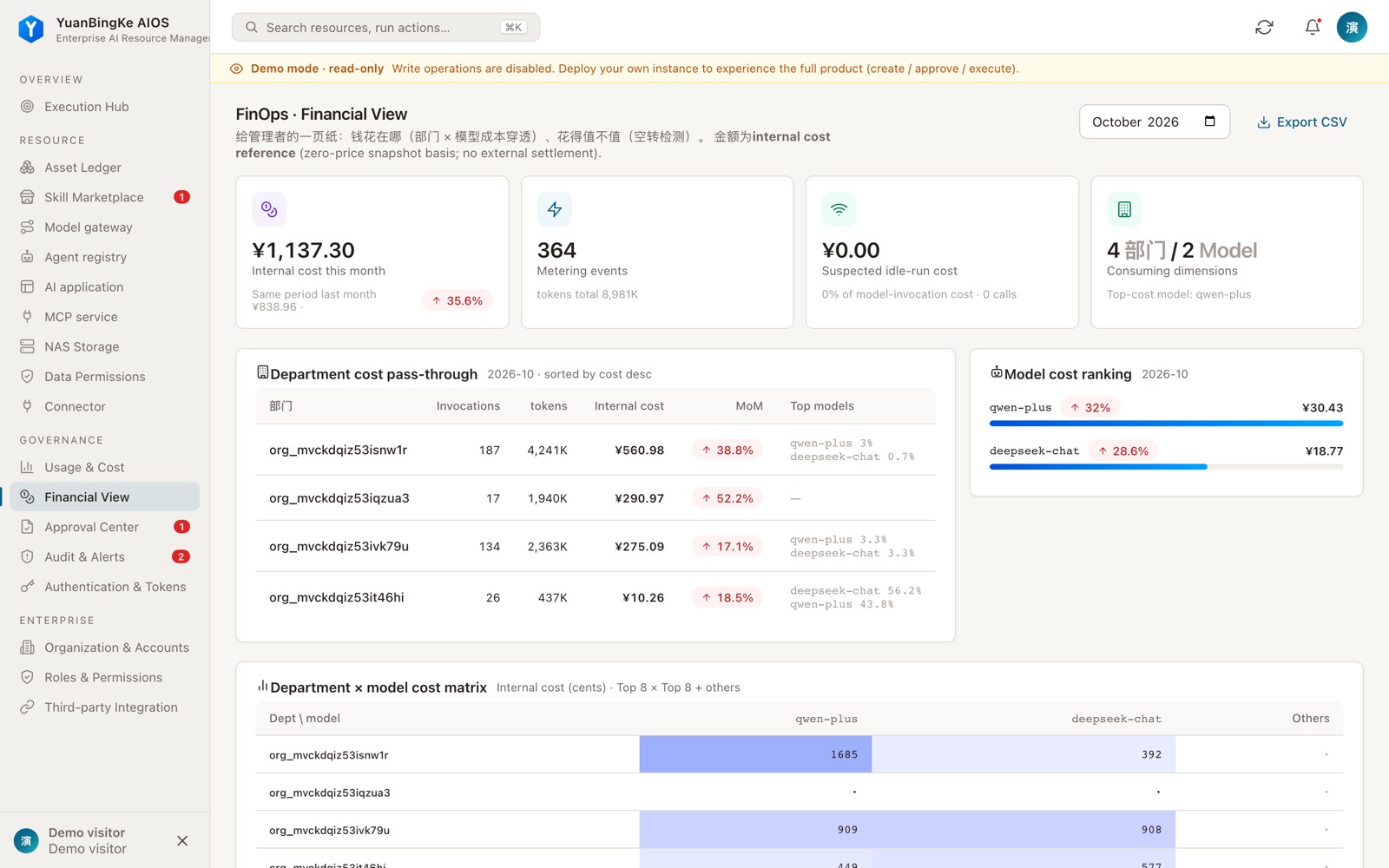
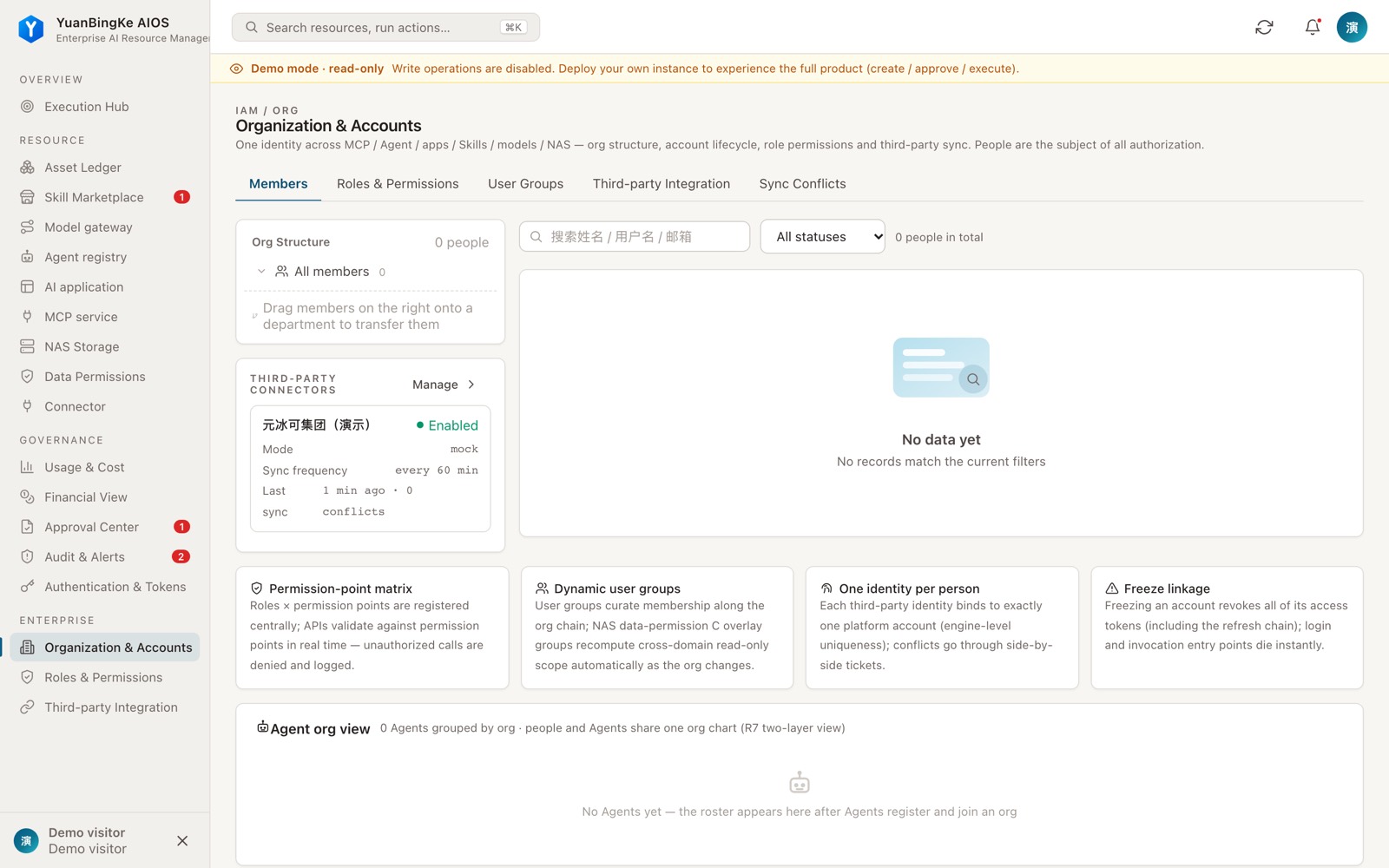
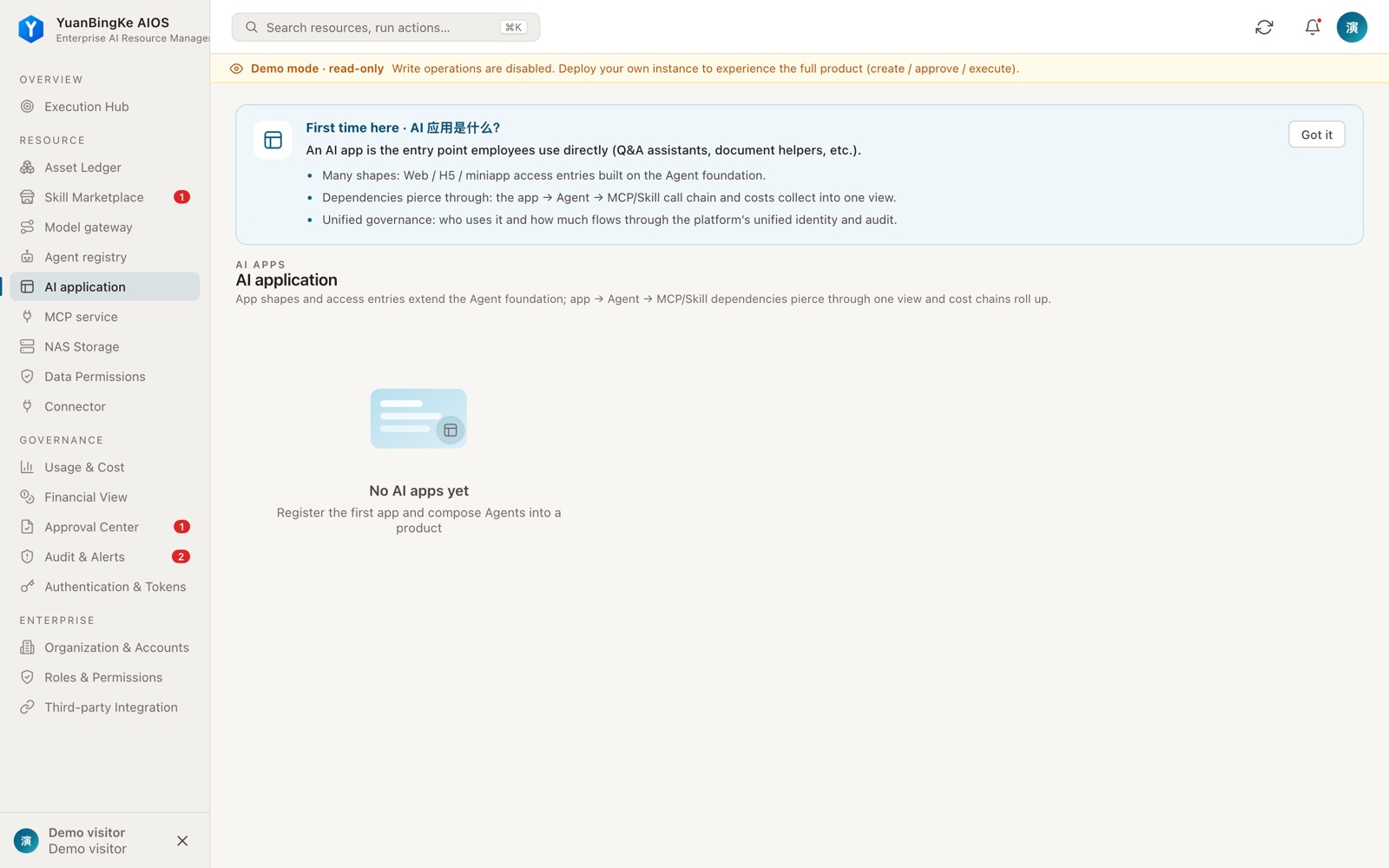
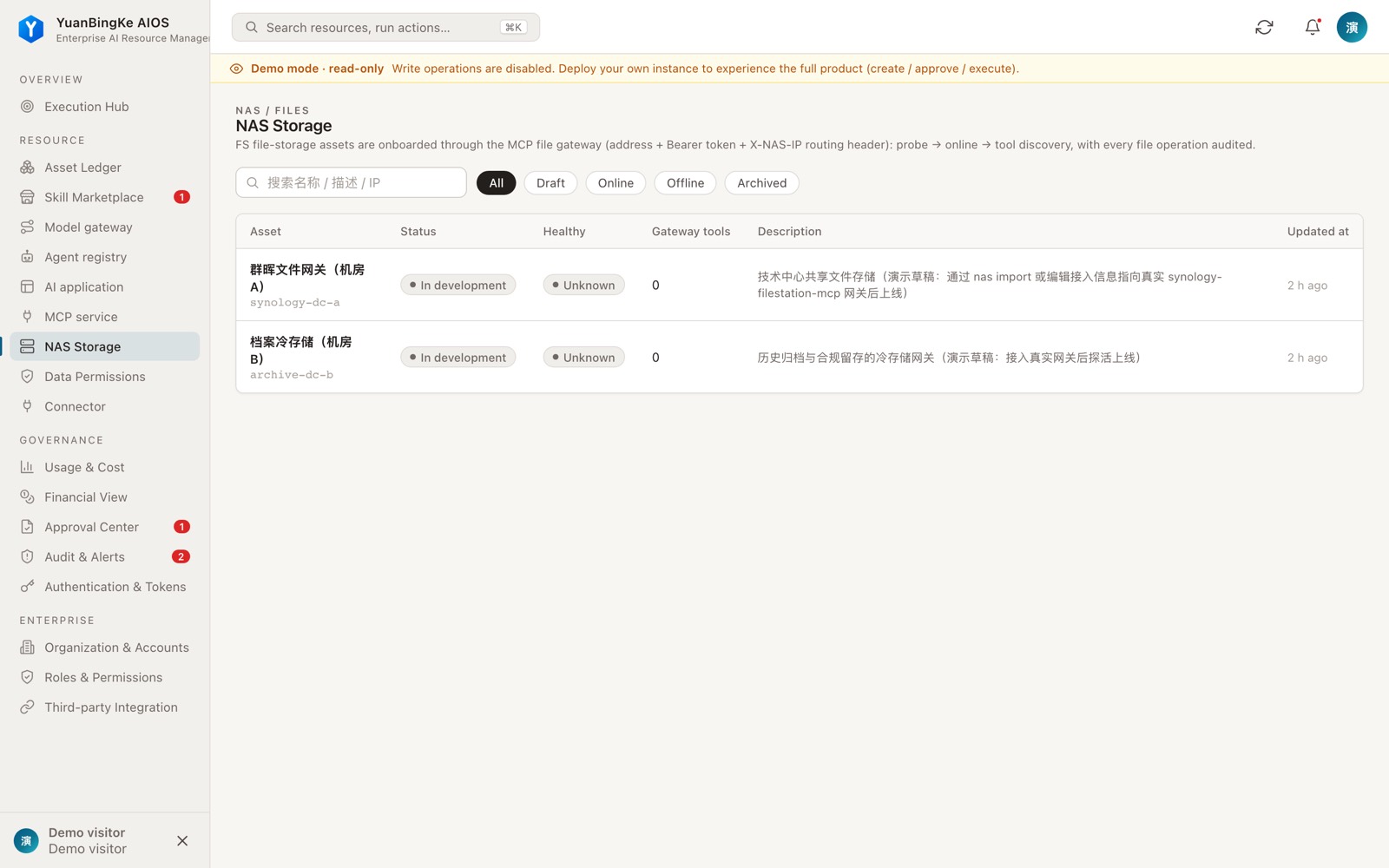
Native TypeScript executed directly by Node, with node:sqlite for storage. We added zero runtime dependencies — the audit log and the ledger are the product, not an afterthought.
# clone + run (needs Node 22.6+)
git clone https://github.com/01men/ybkkasi.git
cd ybkkasi && npm install && npm start   # → http://127.0.0.1:7300

# or with Docker
docker compose up -d          # Dockerfile + docker-compose.yml included

# verify it works
npm run selftest              # 2015 assertions
Also available as 98 MCP tools, so an agent can read its own governance state.
No — and the distinction matters. LLM gateways sit in the request path. YBK sits in the inventory layer: it knows what assets exist, what they cost, who owns them and what their blast radius is when you change them. Many teams run both.
They answer "what happened in this request". YBK answers "which department, agent and skill is responsible for this spend, and who approved running it". Trace data is an input to that question, not the answer.
One person. That is a real limitation and worth stating plainly. The mitigations are architectural rather than promissory: MIT source you can read today, self-hosting so nothing breaks if I disappear, and 2015 assertions in CI so regressions surface immediately.
The architecture supports org-level isolation and there is a five-platform theme system, but the hosted SaaS path is not the product today. The product is the self-hosted instance you run inside your own network.
It is the real product running against seeded data in read-only mode. Write operations return 405 by design. To try writes, self-host it.
Long-lived third-party credentials (API keys, internal service tokens) now have a platform home: registered values are AES-256-GCM encrypted at rest, retrieval requires a dedicated permission point (app.credential.fetch) with per-access audit, and rotation is a same-key overwrite (old value invalid immediately). Short-lived workload identity (SPIFFE-style) for agent runtimes remains on the roadmap; agent platform identities today use rotatable machine credentials.